Friction Calculating Mechanism
I worked on this mechanism to calculate both the static and kinetic coefficients of friction between two surfaces for some related courses I took in high school.
Calculating the static coefficient of friction between two surfaces is relatively easy: just get an inclined plane and lift it up until the object starts to slide. Tangent of the angle directly gives you the coefficient. For the kinetic coefficient of friction, you need the sliding object's acceleration. Using the motion of the sliding object, I was able to calculate the friction force and deduce the coefficient of kinetic friction.
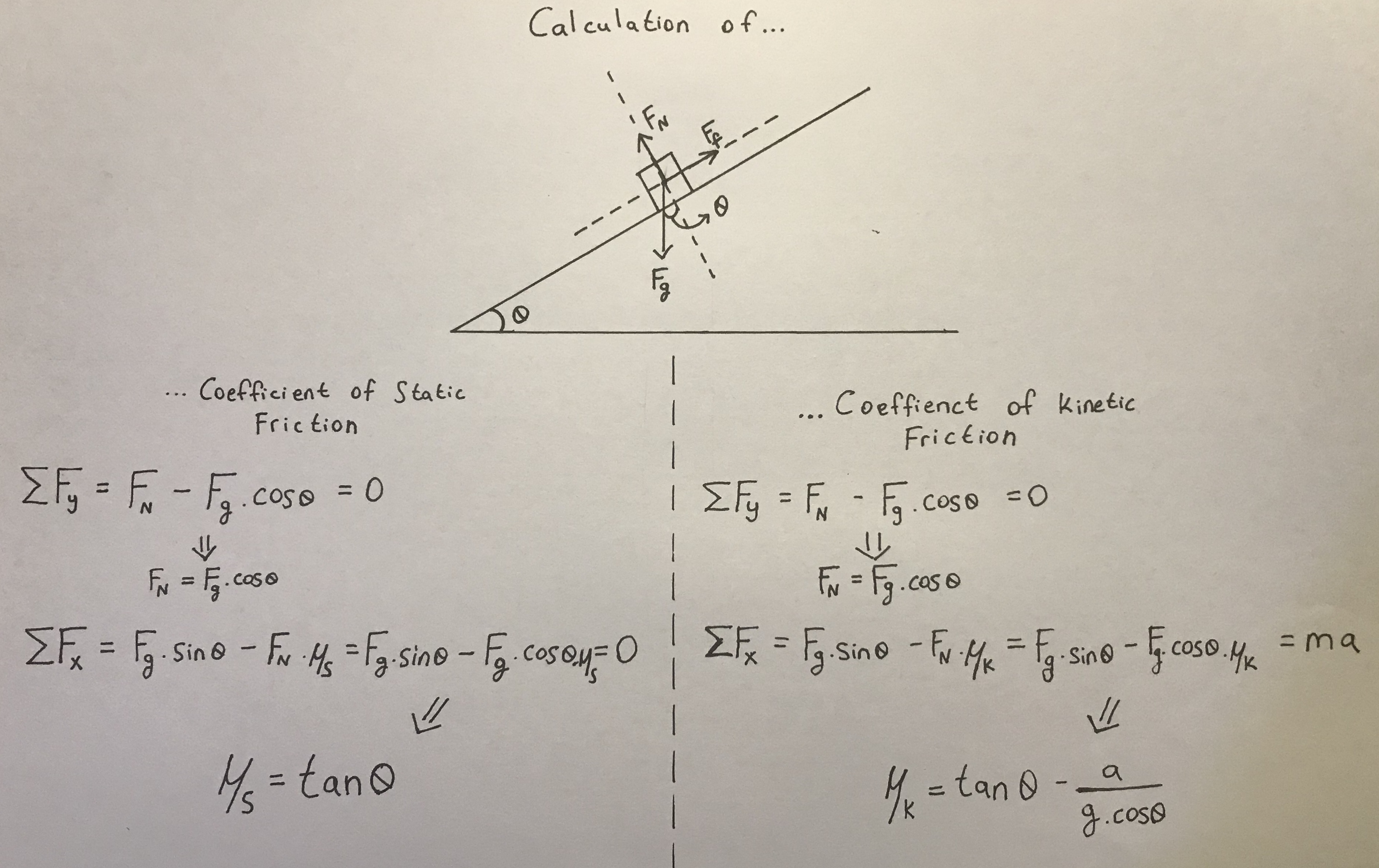
I designed the mechanism in Fusion 360 and printed it using a 3D printer. To measure the incline angle, I used a simple potentiometer. To detect the slide, I used a raspberry pi with pi camera and object tracking with OpenCV. To measure the acceleration of the sliding object, I used a cheap ultrasonic sensor, used numpy to fit the collected data to a second degree polynomial, then took it's second order derivative.
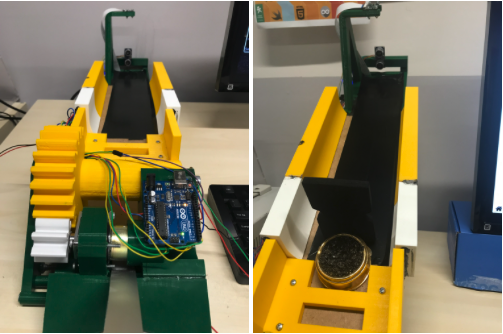
Resulting mechanism was able to automatically calculate the coefficients of friction between two surfaces. To see a more detailed explanation and documentation, please see the git repo.
